


Mozambican academic Summeya Gafur has just cast a firm eye on what often remains invisible in the teaching process: emotions.
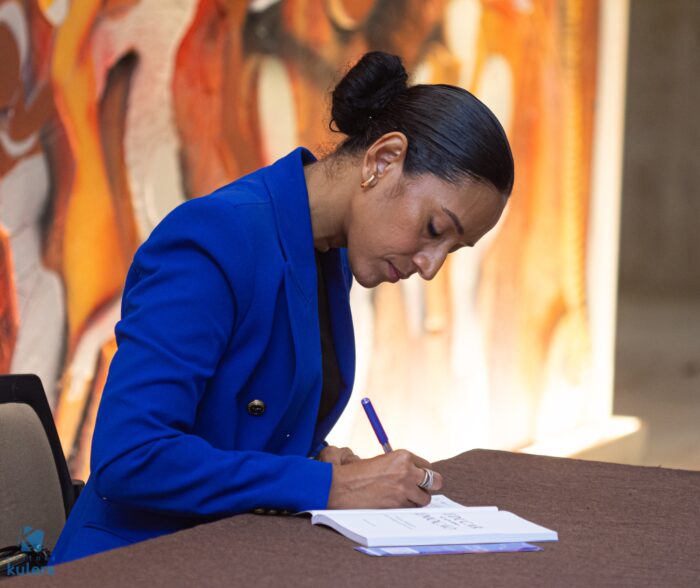
In "Educating with Emotion – Pedagogical Practices with Emotional Intelligence," her most recent work, the professor challenges traditional models and proposes a more human, conscious, and transformative education. She offers concrete tools for teachers and school administrators who deal daily with complex realities inside and outside the classroom.
Based on four pillars—namely self-awareness, self-management, empathy, and relationship management—the work argues that teaching is not just about transmitting content, but about understanding the student as a whole. It combines science and lived experience.
Drawing inspiration from figures such as António Damásio and Daniel Goleman, Gafur translates theories of emotional intelligence into practices adapted to the Mozambican context, without losing global relevance.
Among accounts from teachers facing overcrowded classrooms, resource scarcity, and profound social challenges, simple and effective strategies emerge: listening more, judging less, transforming mistakes into learning opportunities, and creating spaces where students feel safe to exist, not just to answer correctly.
The author rejects the idea of a mechanical education and proposes a teaching method where emotion is not an obstacle, but an ally. For her, empathy ceases to be optional and becomes a central competence, and the teacher is not merely a transmitter of knowledge, but a facilitator of human experiences.
(By Rafael Langa)