
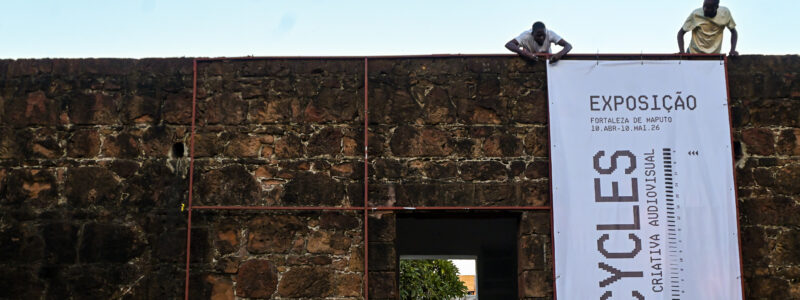
Works created from audiovisual heritage fill the gallery of the Maputo Fortress, where emerging artists and curators from Portuguese-speaking African Countries (PALOP) have mounted the fifth annual UPCycles exhibition.
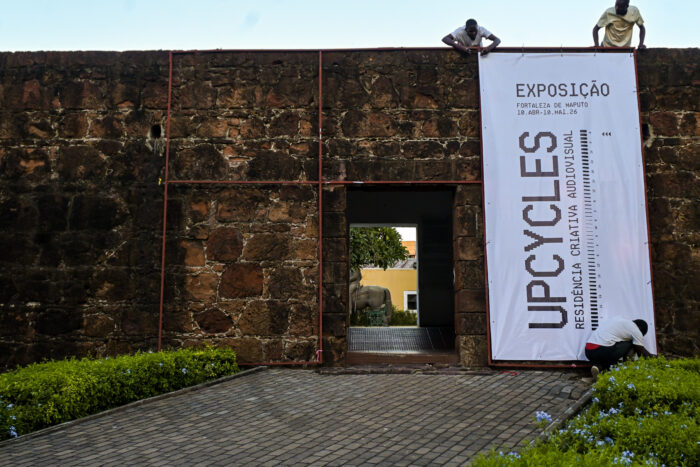
The exhibition, which can be viewed until May 10th, presents the works of Mozambican artists Mário Cumbana, Thandi Pinto, and Délfio Muholove, Cape Verdean artist Gilda Barros, and Angolan-German artist Maresa Nzinga Pinto. It is the result of two months of remote development and two weeks of in-person immersion in Maputo.
Mário Cumbana presents a work that intersects three historical moments: the Mueda massacre of 1960, based on the homonymous film by Ruy Guerra; the September 7th revolution of 1974; and the 2024 protests.
Thandi Pinto proposes a speculative archive of Mozambique, where Mozambicans themselves are central figures, humanizing ethnographic images that for decades were treated as objects of study. Délfio Muholove starts from the question "what kind of country are we building?" and creates an installation on abandoned buildings in Maputo.
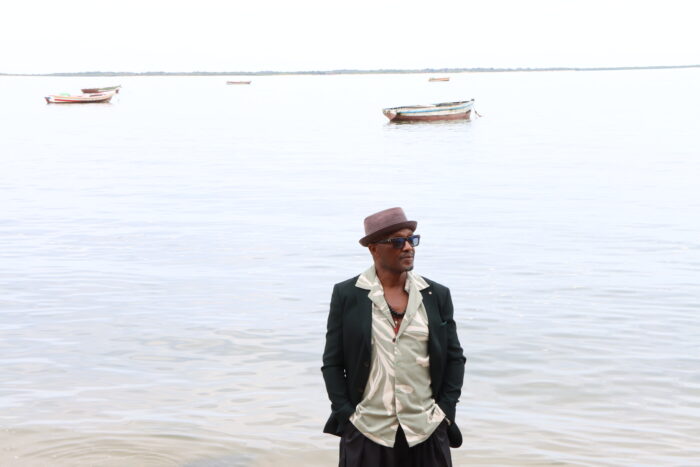
Gilda Barros uses the sea and salt as central elements, drawing from archives of the Portuguese Cinematheque about daily life in Cape Verde, with a focus on women. Maresa Nzinga Pinto dedicates herself to the stories of "madgermanes" women, Mozambican workers contracted by the former German Democratic Republic, intervening in official archives that, according to the artist, "reduce people to numbers."
At the opening of the exhibition, artists João Roxo and Nandele Maguni presented "Archive 16," an experience that combines video collages created on the spot with live-produced analog audio, and dialogues with the spirit of the residency: a live reinterpretation of archives and memories, in an encounter between image and sound.
The residency is promoted by the Association of Friends of the Museum of Cinema in Mozambique (AAMCM). This project is a collaboration between the Calouste Gulbenkian Foundation, the Franco-Mozambican Cultural Center, the Culture Department of Eduardo Mondlane University (UEM), through the Maputo Fortress, Camões – Portuguese Cultural Center, and CIEBA – FBAUL.
(By MozaVibe)