Mozambique at "Beijing+30" in Addis Ababa

Photo: Publicity

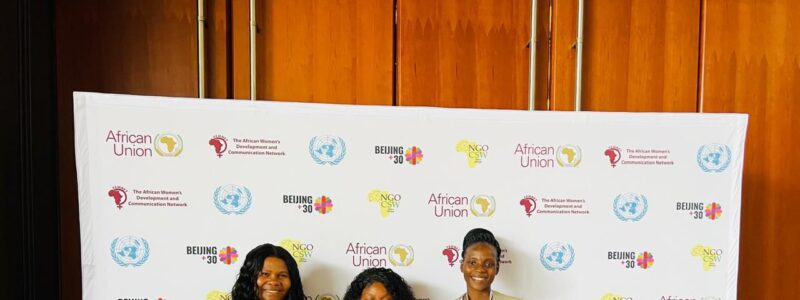
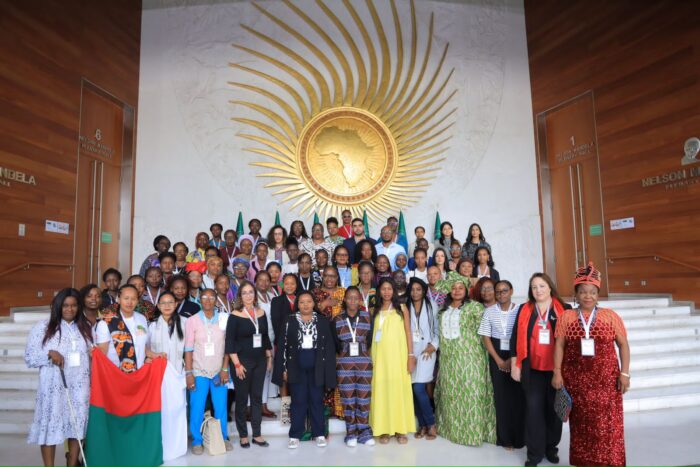
At the invitation of FEMNET (The African Women's Development and Communication Network), Mozambique was represented at the Beijing+30 - Africa Regional Platform, recently held in Addis Ababa, Ethiopia.

This event, which brought together voices from various regions across the continent, included the participation of Mozambican organizations such as AMODEFA, represented by Márcia Mandlate; Jossoal-Manica, represented by Marlene Nilva; and Galamukani-Tete, represented by Felizarda Malene. The conference theme was, “United in Solidarity, Safeguarding Our Gains, and Amplifying Our Voices.”

The Beijing+30 initiative celebrates nearly three decades of work for gender equality since the adoption of the Beijing Platform for Action, a global milestone for women’s rights. Organized by FEMNET in partnership with UN Women, the African Union, and other entities, the meeting in Addis Ababa emphasized the need to protect and expand the progress achieved, aspiring toward a future in which women’s and girls’ rights become an accessible and concrete reality.

On the first days of the event, key gender equality topics were discussed, such as gender-based violence, one of the most critical issues affecting African women, who continue to face high levels of domestic violence and harmful traditional practices.

Another topic of discussion was educational inequality. Despite progress, girls from rural areas still face barriers in accessing quality education.

The platform also addressed women’s economic participation, noting that they remain underrepresented in formal employment and leadership positions and face wage inequality. In a similar vein, the discussions focused on bodily autonomy and reproductive rights, particularly the lack of access to reproductive health services.

Women's political participation was another issue raised, as women remain underrepresented in decision-making spaces and political processes.

Digital access and mental health were also discussed. Young women’s mental health is often overlooked, impacting their well-being and development.

(By Márcia Mandlate)
Journalists concerned about ethics in the profession

Photo: Fundação Fernando Leite Couto


In the current digital age, journalistic ethics are widely disregarded, which is reflected in the transformation of social values and practices.

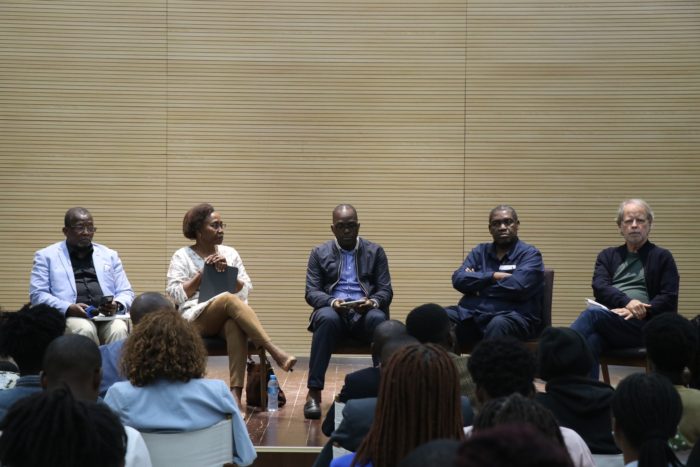
This and other elements were recently discussed at the School of Communication and Arts at Eduardo Mondlane University (ECA-UEM), during the debate ‘Media Ethics in the Digital Age’.

The event was part of the celebration of the centenary of writer and translator Fernando Leite Couto, a former journalist and lecturer at the School of Journalism (EJ), and included the participation of Jeremias Langa, Mia Couto, Rogério Manjate and Cremilde Massingue, moderated by Tomás Vieira Mário.

‘There seems to be a competition between the media to transgress ethical principles’

Rogério Manjate pointed out that a lot of content broadcast by the media violates ethics, including shocking stories shown at inappropriate times and unprotected images of women and children suffering sexual violations, as well as citizens accused of criminal offences. He emphasised a kind of competitive tendency to push ethical boundaries.

It emphasised the existence of current pressure on sources of information to cover certain issues of public interest and the transformation of news stories into short advertisements. He also denounced the unethical behaviour of journalists who have compromising information about an organisation and blackmail them to make money.

Another issue addressed by Rogério Manjate is the current scenario in which journalists often depend on rides from state and private institutions to cover a particular story. He argued that it is difficult to take an honest approach in the face of these perks offered to journalists and emphasised the need to critically discuss ethics in journalism in a more transparent and responsible way.

Journalist Jeremias Langa, for his part, raises a question about changing values in the profession. He believes that the internet only expands the communication space, but the big problem lies with people with limited thinking, with little or no training in the area. In other words, anyone can write, even without mastering journalistic principles.

Langa questions how an untrained individual can respect ethics. For many, what matters most are ‘likes’ on social networks. Some television stations even neglect ethics in search of popularity, competing with untrained individuals. Truth, rigour, objectivity and professionalism are some of the elements that journalism must respect.

Like Jeremias Langa, Cremilde Massingue emphasised the need to cultivate the habit of checking sources of information. Corruption cannot be accepted.

Poverty should not be used as an excuse for unethical behaviour

During the panel discussion, in the question and answer session, the audience even blamed poverty as one of the main culprits for ethical deviations. Negligence on the part of media regulators and society itself, which values poorly written content, were not left aside.

In response, the panel stressed that poverty is no excuse for unethical behaviour. They said that journalism does not generally provide high incomes, and that journalists should opt for correctness and ethics, even in the face of financial difficulties.

In addition, the importance of a joint effort with society to overcome challenges was emphasised. It suggested that self-regulation be prioritised over external regulation, highlighting the individual and collective responsibility of communication professionals to maintain high ethical standards.


(By Reinaldo Manhice)