
In the midst of the chaos, births occurred. Isolated, frightened women, surrounded by water, found in Emilia the only possible support.
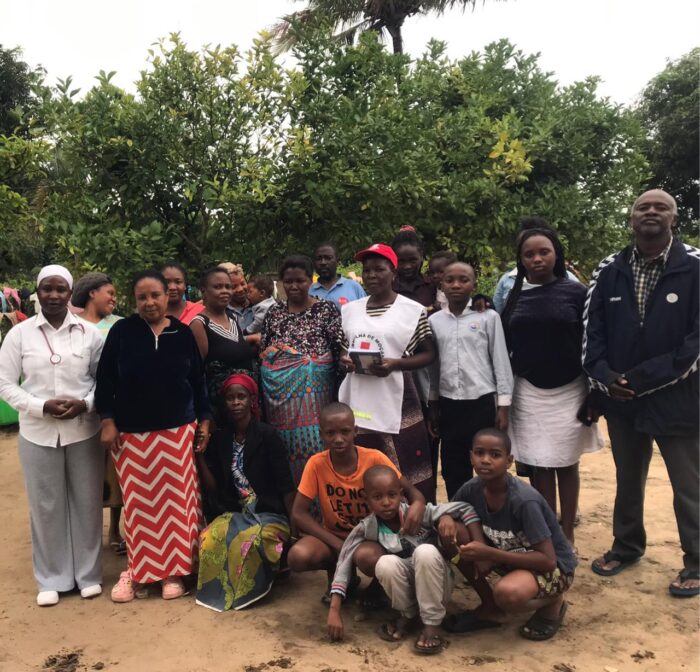
In a time when climate crises are testing human limits, Emilia Rodmila's journey reminds us that true success lies not in the absence of fear, but in the courage to act despite it. Her story begins with an intimate and urgent impulse to save her own mother.
“I left home with a heavy heart. My mother was in danger because of the floods, and all I wanted was to get to her,” she recalls.
However, the path quickly changed. Between flooded streets and submerged houses, Emilia began to encounter people in critical situations.
“I started finding people who needed immediate help. That's when I realized I couldn't turn back.” What was a personal mission quickly became a collective commitment.
The roads were blocked, the silence broken only by the sound of water invading everything. Between family duty and medical responsibility, she made a difficult decision: she left her mother in relative safety to help those who needed it most at that moment.
“It was an impulsive choice, driven by the desire to save lives, without thinking about the consequences of also becoming a victim.”
Without a hospital, without electricity, and without basic necessities, the water continued to rise—from ankles to waist. Even so, medicine didn't stop. “I told myself: as long as I have hands, a voice, and knowledge, someone will survive.”
In the midst of the chaos, births occurred. Isolated, frightened women, surrounded by water, found in Emília the only possible support. “There was a moment when I thought: this isn't possible. But then I realized it was now or never.”
Without dramatizing, Emília describes a scenario that mixes fragility and strength: “The water was cold. We used what we had to bring several children into the world amidst the floods.”
It was in this contrast—between destruction and birth—that she found the true meaning of those hours. For the doctor, each life she helped bring into the world symbolizes resilience, humanity, and hope, even when almost everything seemed lost.
Emilia Rodmila's story shows us that medicine doesn't only exist in hospitals, nor does it depend on ideal conditions. Above all, it exists in the capacity to put others first—even when the heart yearns to run in another direction.
(By Rafael Langa)