
Mafalala is, for many reasons, the "bastion" of Mozambican poetry.
Memories about Mafalala always challenge us to see the neighborhood as a kind of sanctuary for Mozambican arts and culture. Today transformed into the Craveirinha Foundation, the former home of José Craveirinha (1922-2022) – the first African winner, in 1991, of the Camões Prize, the greatest literary award in the Portuguese language – is one of the mandatory stopping points for anyone taking a tourist tour of the place.
Mafalala is, for this and many other reasons, the “bulwark” of Mozambican poetry. The Camões Prize won by Craveirinha only proved why he is called the greatest poet. His former home, today the Craveirinha Foundation, remains the guardian of his rich estate, which goes beyond the boundaries of literature. After all, the husband of “Maria” – the name of his wife and also of one of his books – also ventured into sport. It was, in fact, he who discovered Lurdes Mutola and introduced her to his son, Stélio, who trained her until she became world athletics champion.
And, if much more can be said about Craveirinha, the same happens with Noémia de Sousa (1926-2002), considered the mother of Mozambican poets, as she was one of the pioneers of Mozambican poetry. It was in his old residence that he lived, in the 1940s, and produced fundamental works for resistance literature, such as “Deixa Passar o Meu Povo”.
His former residence appears on the area's tourist map, linked to the memory of Noémia de Sousa as a poet and journalist who, like Craveirinha, fought against Portuguese colonialism.
However, Mafalala does not just breathe poetry. Fany Mpfumo also passed through here, considered by many to be the father of marrabenta. It was in this place that the musician received the nickname “Fany”, which is one of the reasons why his former residence is one of the most emblematic tourist attractions in the neighborhood, easily identifiable by its blue color and metal construction.
And, as it is said that whoever sings probably wants to dance, this element is connected to the fact that the neighborhood also welcomed Augusto Cuvilas (1971-2007), one of the pioneers of contemporary dance in Mozambique, who, in 2003, became the first Mozambican to win an international prize at Danse L’Afrique Danse.
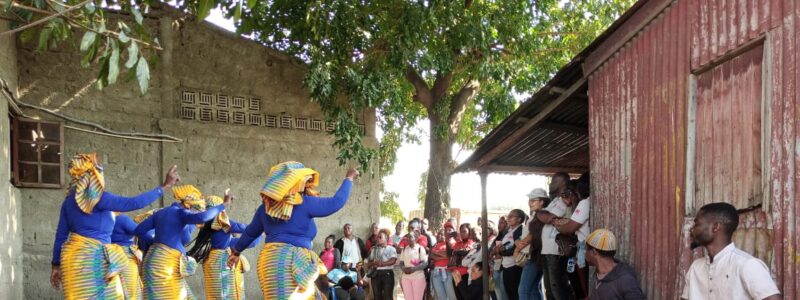
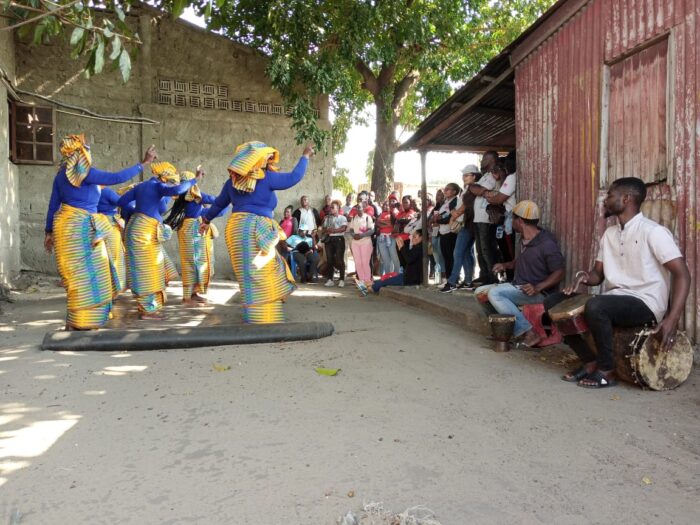
And, speaking of dance, currently one of the biggest symbols of Mafalala is Tufo da Mafalala, a group that reflects the cultural and artistic diversity existing in the neighborhood. The group celebrates the beauty of the Emakhuwa woman through traditional dances typical of Nampula and with Afro-Arabic influence such as tufo, ndzope and matsepwa.
(By Lucas Muaga)