


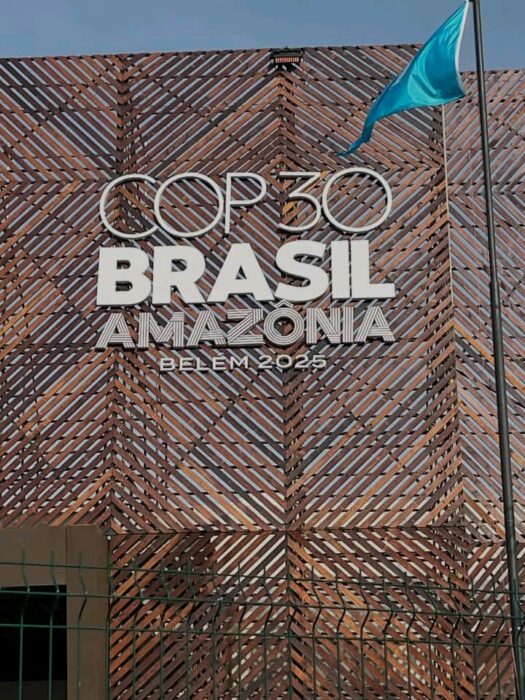
With increasing heat waves and the expectation that global demand for cooling will triple by 2050, the United Nations Environment Programme (UNEP) released the Global Cooling Watch 2025 report during COP30 in Belém.
The document warns that, without changes, emissions from the sector could almost double, reaching 7.2 billion tons of CO₂e.
UNEP advocates for the urgent adoption of a Pathway to Sustainable Cooling, capable of reducing projected emissions by 64% by 2050—or up to 97% if the electricity sector is fully decarbonized. The plan includes more efficient buildings, increased urban green spaces, and low-energy technologies.
According to Inger Andersen, UNEP Executive Director, access to cooling should be treated as essential infrastructure, alongside water and energy. The global implementation of these measures could generate savings of US$17 trillion in energy costs and avoid US$26 trillion in investments for the expansion of electricity grids, in addition to guaranteeing adequate cooling for up to 3 billion people.
The initiative also reinforces the international Beat the Heat movement, supported by more than 185 cities and 72 countries. For the president of COP30, André Corrêa do Lago, the progress shows that coordinated actions produce real results.
Despite this, policy adoption remains uneven: only 54 countries have complete cooling strategies; 78 cover two pillars; 40 only one; and 20 have not initiated any actions.
The report concludes that cooling should be considered a public good, essential for climate adaptation. The mayor of Fortaleza, Evandro Leitão, stated that the city is betting on nature as a central element against extreme heat and wants to share experiences with other cities within the scope of Beat the Heat.
(By Renaldo Manhice)