
Culture is the set of values, practices, traditions, artistic expressions, knowledge, beliefs, and ways of life that a community shares. It ranges from language, music, and cuisine to forms of coexistence, collective memory, and symbols.
It plays an essential role in building peace, reconciliation, and social cohesion. It is in this spirit that PROPAZ, Culture for the Promotion of Peace, was created, supported by the European Union and implemented by a consortium of organizations (CISP, IVERCA, LeMuSiCa, and IMD).
Since 2022, the project has been operating in Manica, Sofala, and Tete, promoting creative workshops, performances, visual interventions, and spaces for dialogue, transforming memories of war into platforms for encounter and collective healing.
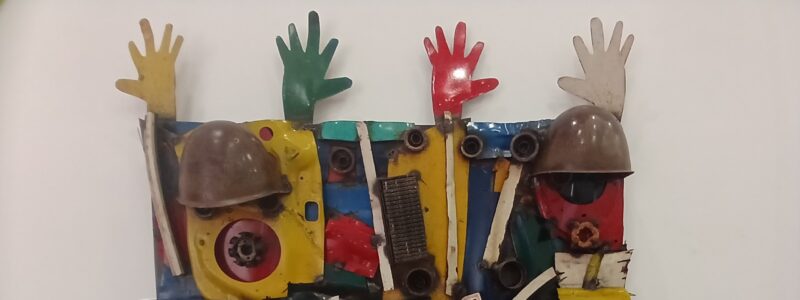
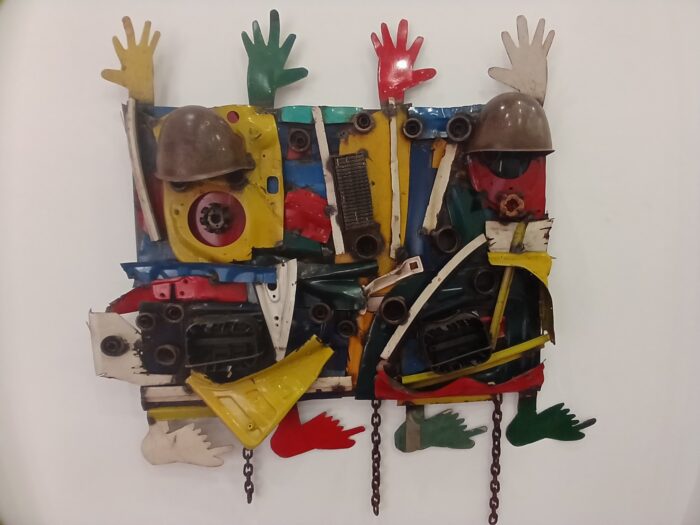
At the heart of this initiative is the traveling exhibition "The Fortunetellers of the Peacemakers," by nationally and internationally recognized Mozambican artist Gonçalo Mabunda. The artist uses decommissioned weapons, including AK-47s, rockets, pistols, and ammunition, to create sculptures that evoke masks, thrones, and totems. Each piece is an act of symbolic disarmament: where there was destruction, form, memory, and hope emerge.
These works will travel through the cities of Tete, Chimoio, and Beira, in an exhibition that transcends the gallery space and becomes a form of cultural justice. Thus, Mabunda will bring his art to communities affected by war, affirming culture as a right and a tool for peace.
Mabunda, born in Maputo in 1975, is one of the most resonant and original voices in the African art scene. Present in internationally renowned museums and biennials, such as the Centre Pompidou, the Guggenheim, and the Venice Biennale, the artist combines African and modernist aesthetics to engage with the scars of colonialism, civil war, and inequality. His artistic journey began at the Maputo Art Center, where he participated in pioneering projects such as Transforming Arms into Art.
European Union Ambassador Antonino Maggiore emphasized that peace and reconciliation are long-term processes that require not only security but also inclusive development and community strengthening. He also emphasized that the exhibition "The Diviners of the Peacemakers," by Gonçalo Mabunda, symbolizes this collective commitment by transforming deactivated weapons into works of art that inspire dialogue, hope, and unity.
Karen Sibell Yin Rafael, Coordinator of the PROPAZ project at CISP Mozambique, emphasized that art plays an essential role in collective healing and reconciliation in the country. She emphasized that Gonçalo Mabunda's traveling exhibition transforms weapons of war into symbols of peace, memory, and dignity, inviting communities to reflect on the past and build, together, a more just and peaceful future.
Meanwhile, the exhibition curator and president of the IVERCA Association, Ivan Laranjeira, emphasized that the PROPAZ project has brought the arts closer to communities affected by the conflict, promoting collective healing, memory, and reconciliation. He emphasized that Gonçalo Mabunda's sculptures, made from weapons of war, reflect the history and culture of Mozambique, creating new narratives of hope, critical thinking, and peace.
Mabunda's works are made from war material from the Disarmament, Demobilization, and Reintegration (DDR) processes. The message is clear: Peace is not born solely from agreements, but from encounters, shared memories, and healing symbols. Each visitor is invited to reflect.
(By Joana Mawai)