
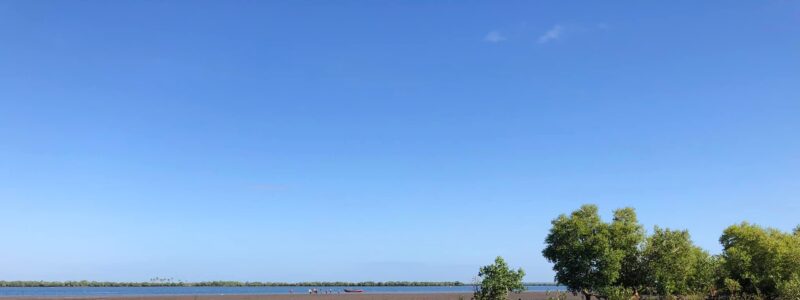
Currently, part of this river is turning into a dry bed, characterized by the absence of visible water and the presence of sediments such as sand, gravel, and stones, which leads the local population to occupy the area and cut down trees for domestic use.
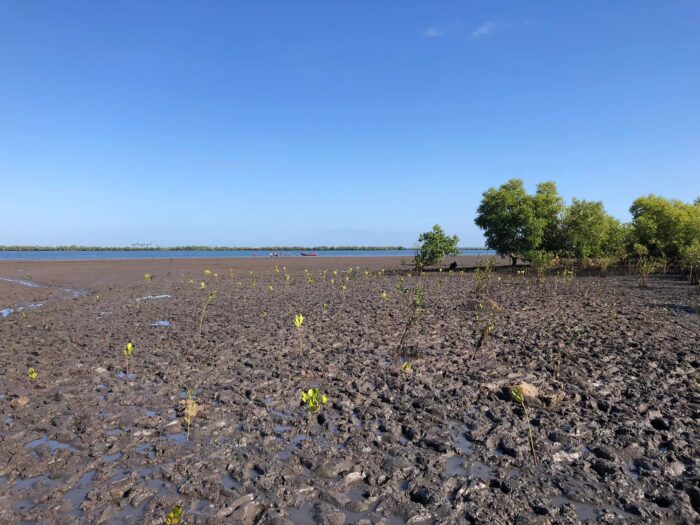
The Tembe River, located in the municipal district of Katembe, in the Incassane neighborhood, is benefiting from mangrove reforestation in a joint effort between private and government entities aimed at restoring coastal ecosystems.
This involves the reforestation of approximately two hectares, with the planting of five thousand seedlings of native mangrove species, namely Cariops tagal, Bruguiera gymnorhiza, and Rhizophora mucronata. This initiative is a partnership between Karmol Mozambique and the Municipality of Maputo.
The Tembe River originates in southern Mozambique, near the border with Eswatini, and flows into Maputo Bay. Currently, part of this river is turning into a dry bed, characterized by the absence of visible water and the presence of sediments such as sand, gravel, and stones, which leads the local population to occupy the area and cut down trees for domestic use.
These actions reduce biodiversity and increase the vulnerability of communities to natural disasters. The people of Incassane find various ways to cut down, especially mangroves, which are known for their vital ecological, social, and economic importance.
From an environmental perspective, mangroves reduce the force of waves and protect against coastal erosion and cyclones, serving as natural barriers, especially in the face of climate change. Many species of fish, crabs, shrimp, and mollusks use mangroves as shelter and breeding grounds. Additionally, they attract birds such as
flamingos, herons, and pelicans.
According to the Turkish ambassador to Mozambique, Ferhat Alkam, mangroves are more than just coastal vegetation. “They are a symbol of resilience, balance, and harmony with nature. These unique ecosystems protect coastlines, support
biodiversity, and act as natural carbon sinks, helping us combat the global challenge of climate change”, he says.
For the General Manager of Karmol Mozambique, Cumhur Aksoy, “this initiative aims to restore the local environment, protect the coastline, promote biodiversity, and support the sustainability of communities and the ecosystem”.
(By Joana Mawai)