
The colonial past still echoes among the ruins of Fort São Sebastião, built in 1720 as a Portuguese defense stronghold, now functioning as an open-air
museum housing artifacts and exhibitions about European occupation, trade, and cycles of resistance in the region.
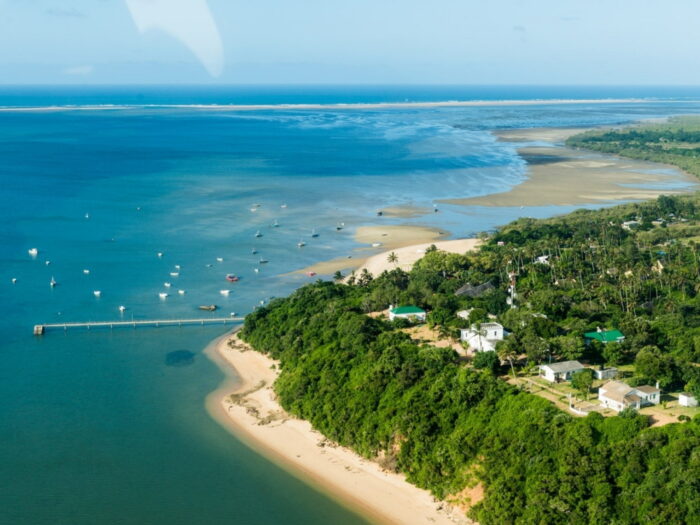
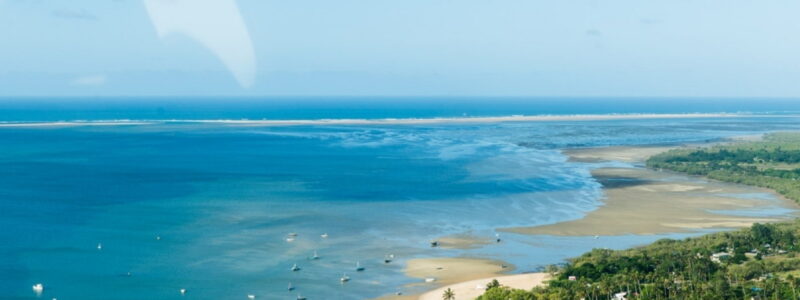
At the mouth of Maputo Bay lies the Island of the Portuguese, a great option for domestic tourism and a living example of how history, nature, and leisure can come together.
Visited daily by tourists departing from the capital on boats organized by local operators, the Island of the Portuguese offers attractions that go beyond its translucent waters and fine sandy beaches.
The colonial past still echoes among the ruins of Fort São Sebastião, built in 1720 as a Portuguese defense stronghold, now functioning as an open-air
museum housing artifacts and exhibitions about European occupation, trade, and cycles of resistance in the region.
Discovered by the Portuguese in 1498, the island served for centuries as a strategic point for controlling access to the Maputo River and as a trading
post. Its ruins, old churches, and limestone architectural elements continue to attract visitors interested in the physical memory preserved by the site.
Recreational fishing, free diving, snorkeling, and coastal walks are part of the options that make the Island of the Portuguese a versatile destination,
capable of pleasing both leisure tourists and cultural explorers.
From an environmental perspective, the island does not disappoint. It is home to endemic bird species and coastal flora, attracting not only occasional
visitors but also students, researchers, and nature lovers seeking observation and outdoor learning experiences.
Unlike saturated destinations, tourism here remains slow-paced. The absence of commercial buildings and limited access help preserve its rustic character, and it is precisely this simplicity that has increasingly won admirers.
The Island of the Portuguese is, at the same time, an open-air museum, a natural viewpoint, and a place for contemplation, where one can immerse in
history, in the salt of the Indian Ocean, and in silence broken only by the sound of the waves. It is a piece of Mozambique that carries the marks of centuries on its surface and, in its soul, the potential to become a meeting point between past and present. In times when tourism seeks authenticity, the
island offers something rare — an experience that needs no retouching to be genuine.
(By Rafael Langa)