

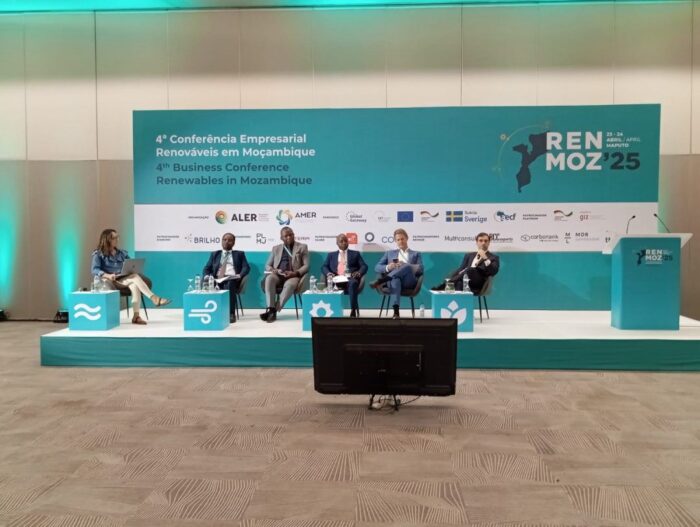
By 2030, energy capacity will have tripled, driven mainly by solar and wind sources. This is one of the predictions of the RENMOZ-2025 Renewable Energy Atlas, a strategic publication recently prepared and presented by the Mozambican Renewable Energy Association (AMER) in Maputo.
The atlas compiles up-to-date information on the main projects, statistics and directions of the clean energy sector in the country. It is a reference tool to accelerate universal access to energy by 2030. According to the data contained in the atlas, Mozambique achieved an electrification rate of 61 percent in 2024, marking a significant advance compared to previous years. Energy capacity is expected to triple by 2030, driven mainly by solar and wind sources.
In this sense, the start-up of the first national wind farm is expected to take place soon. Organized into thematic chapters, RENMOZ-2025 addresses the main pillars of the National Energy Transition Strategy, including solar home systems, mini-grids, clean cooking solutions and financing mechanisms. To achieve the goal of full energy access, approximately 5.6 million distributed energy systems will need to be installed over the next decade.
The atlas also reveals that 65 percent of the energy currently consumed in Mozambique already comes from renewable sources. The ongoing strategy foresees a global investment of US$80 billion, distributed across 14 programs, eight of which are considered priorities. To ensure coordinated implementation, an inter-institutional implementation committee was set up, with representatives from different sectors.
In addition to setting goals and guiding policies, RENMOZ-2025 provides detailed operational guidelines for the development of projects in the sector, identifying the steps to be followed and the entities responsible. Regarding mini-grids, the country has more than 100 systems in operation, and new public tenders will be launched to expand coverage in areas currently without connection to the national grid.
At the presentation ceremony, Rita Marouço, from the Lusophone Renewable Energy Association (ALER), highlighted that the atlas goes beyond a simple compilation of data. According to her, it is a strategic platform that expresses Mozambique's commitment to a fair and sustainable energy transition, with strong involvement from the private sector and institutional partnerships.
(By Renaldo Manhice)