
Several non-governmental organizations have been engaged in the rehabilitation of girls, aiming to change their future through education and economic empowerment.
In Mozambique, early marriages, teenage pregnancies, and low family income remain determining factors in girls dropping out of school.
This reality is more pronounced in remote areas, where social and economic inequalities limit access to and retention in the education system.
Faced with this scenario, several non-governmental organizations have been engaged in the rehabilitation of girls, aiming to change their future through education and economic empowerment.
In the last five years, 4,330 girls have been covered by the Empowering Adolescents and Girls to Learn and Earn (EAGLE) project, implemented in eight districts of the provinces of Manica, Nampula, and Sofala.
The initiative is funded by Canada, in partnership with Mozambique, and had a budget of 10 million Canadian dollars, as well as the creation of 137 learning centers.
From this group, 3,109 girls completed all stages of the program, directly benefiting from training and activities aimed at strengthening life skills, education, and income generation.
According to VSO's executive director, Donne Cameron, the project generated significant gains for the adolescent girls involved, contributing to increased learning opportunities, economic autonomy, and informed decision-making.
In turn, the representative of the Minister of Education and Culture, Maria Conde, considers the project an active economic agent in the communities, with a direct impact on local development and the promotion of gender equality.
The initiative fits within efforts to promote gender equality and social inclusion, demonstrating a real impact on expanding learning opportunities and strengthening the economic autonomy of girls in vulnerable contexts.
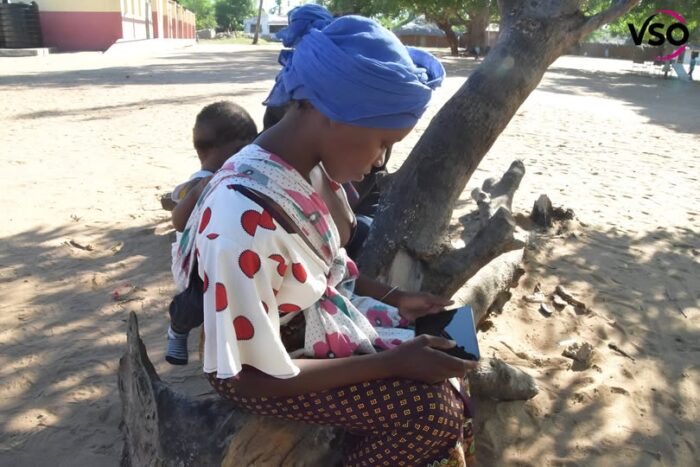
The EAGLE Project's main objective was to promote literacy among adolescent girls through innovative digital teaching approaches. The initiative utilized educational technologies to teach basic literacy and numeracy skills in a digital format, linking this content to the development of life skills.
The project methodology was based on a combination of digital and in-person sessions, with interactive content adapted to the Mozambican context. In addition to the educational component, EAGLE integrated income-generating activities, included in the economic empowerment package, aimed at strengthening the autonomy of the beneficiary girls.
Throughout its implementation, the project demonstrated that the use of digital platforms such as OneCourse and Yaya can significantly reinforce basic literacy and numeracy skills, while promoting digital inclusion and female empowerment in vulnerable communities.
(By Joana Mawai)