
The Mafalala Museum, in the city of Maputo, breaks with the traditional moulds of museology. It establishes itself as a true symbol of sustainable tourism, community inclusion and preservation of collective memory.
Far from the conventional standards of museum infrastructure, the space builds its support base through parallel initiatives, combining social entrepreneurship with cultural promotion.
Directed by Ivan Laranjeira, the Mafalala Museum is an exhibition space and an agent of social and economic transformation. Over its almost six years of existence, the institution has challenged historical stigmas that for decades marginalised Mafalala in Maputo's tourist circuit.
"If Mafalala was once a periphery, today, with the organic expansion of the city, Mafalala is increasingly the centre", says Ivan Laranjeira, highlighting the strength of a spontaneous transformation that takes shape over time and with the cultural resistance of the community.
“The precarious economic structure and the stigma associated with the neighborhood were directly reflected in the way tourism operators viewed the region, also impacting the self-esteem of its own residents,” he said.
In response, the Mafalala Festival was born, an event that promotes local culture, strengthens the neighborhood’s identity and repositions it as a destination for authentic experiences.
Today, the Mafalala Museum is a vibrant platform that employs tour guides, librarians and gallery owners, with a focus on preserving and disseminating the neighborhood’s historical collection. The space is also an active voice in the fight for the decentralization of the cultural sector, advocating against the exclusion of historic neighborhoods in urban development.
“Our job is to raise awareness, advocate and always be at the forefront of the interests of the Mafalala neighborhood,” he emphasizes.
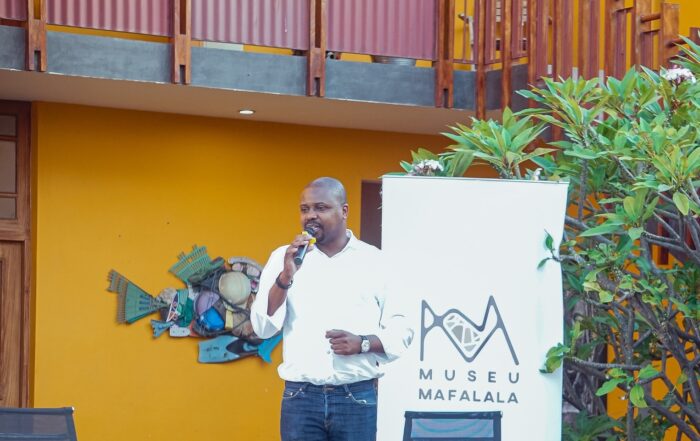
Ivan Laranjeira, coordinator of the IVERCA association and director of the Mafalala Museum, spoke during an international virtual debate on “Mafalala Museum – A community experience of resignifying memory”.
(By Rafael Langa)