
The course's methodological foundation is the principle of replication: trainees are encouraged to transfer their knowledge to their neighborhoods, creating local production centers and promoting community practices around waste management and the use of alternative energy sources.
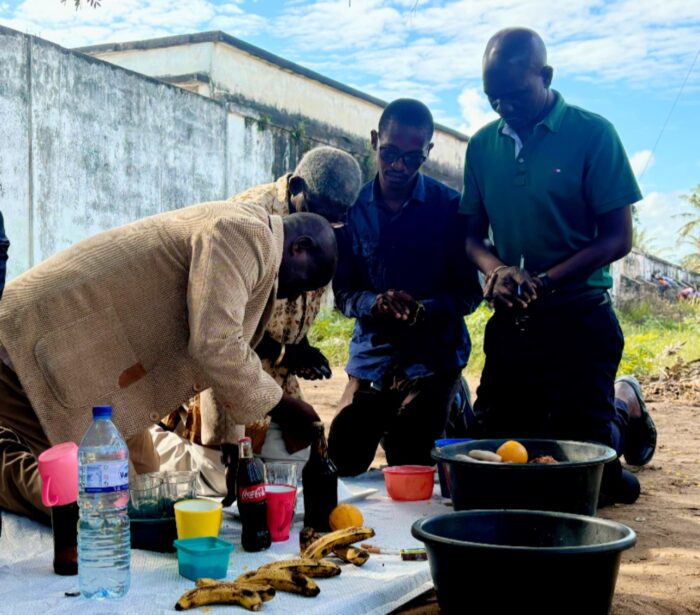
Twenty young people from the city of Quelimane recently participated in a training course focused on the production and use of biogas as an alternative energy source for cooking. The two-week course offers technical and practical content on the assembly, operation, and maintenance of biodigesters—systems that convert organic waste into usable gas—and is part of a broader strategy to promote sustainable solutions at the community level.
The initiative is from the Association for Ecological Preservation and Biodiversity (APEB), in partnership with the Quelimane Municipal Council (CACQ), under the Youth Fund for Climate Initiatives. It is supported by Bloomberg Philanthropies, as part of its commitment to combating climate change and creating opportunities for youth.
Engineer Brito Lopes, responsible for the technical component, presented a set of integrated interventions that align with environmental protection and the promotion of sustainable livelihoods. Among these, he highlighted the production of ecological charcoal and the cultivation of shrimp, tilapia, and crab, with a focus on mangrove repopulation and the restoration of degraded ecosystems.
The course's methodological foundation is the principle of replication: trainees are encouraged to transfer knowledge to their neighborhoods, creating local production centers and promoting community practices around waste management and the use of alternative energy sources. The proposal is based on the observation that the traditional model of firewood and charcoal consumption continues to exert strong pressure on forest resources, requiring responses that combine energy efficiency, accessibility, and respect for ecosystems.
In addition to the technical component, the program includes sessions on small business management, environmental activism, volunteering, and community organizing. These modules seek to broaden the involvement of young people, preparing them to join local climate action networks, promote ecologically based economic initiatives, and strengthen the role of youth in the energy transition.
The training takes place in a context where the debate on renewable energy, climate justice, and local adaptation to environmental change has been gaining relevance in Mozambique. Quelimane, in particular, has been the site of projects focusing on resilient solutions, earning national and international recognition for innovative experiences in urban governance and environmental sustainability.
(By Rafael Langa)