
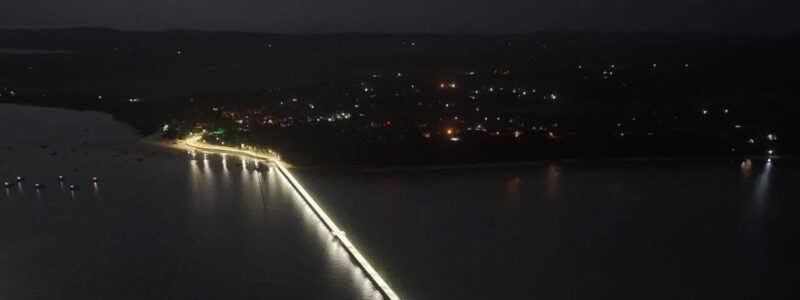
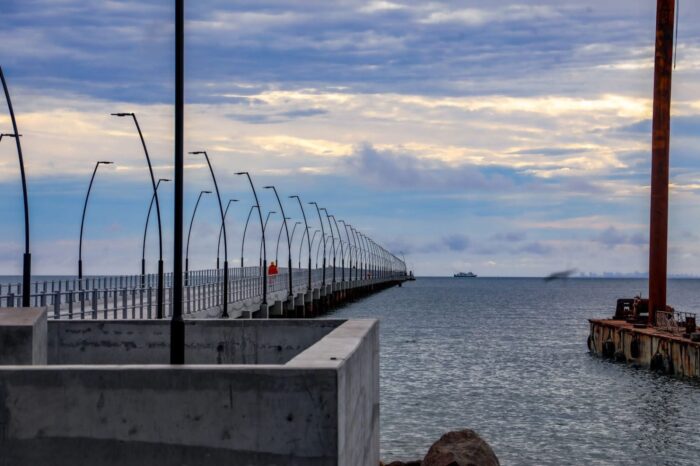
Things promise to improve starting this month, after all, it is to overcome these kinds of barriers that the world's largest pier-bridge was recently inaugurated. The infrastructure is approximately 936 meters (almost a kilometer) long, allowing boats to dock in deeper waters.
Inhaca is one of the most beautiful and important tourist spots in the country. However, for years, access to the location, just 32 kilometers from the city of Maputo, has always been difficult due to the lack of a pier.
This situation resulted in precarious disembarkation. Because of the lack of depth near the coast, larger vessels could not dock. Thus, passengers were forced to disembark far from the shore and complete the last leg of the journey by wading through the water, often waist-deep and carrying luggage and goods on their heads.
Another disadvantage was economic isolation, as the situation made it difficult and expensive to transport local products and essential goods to the tourist island.
However, things promise to improve starting this month, as it is to overcome these kinds of barriers that the world's largest pier was recently inaugurated. The infrastructure spans approximately 936 meters (almost one kilometer), allowing boats to dock in deeper waters.
The infrastructure, valued at $13.5 million, is equipped with public lighting and was designed to boost tourism and facilitate trade, breaking the historical isolation of the population of Inhaca Island.
Another important point is that passengers and vehicles can move directly from the boat to the shore safely and comfortably, eliminating the need to walk through the water (which can still be done for other reasons such as leisure and spirituality).
With only 42 square kilometers, Inhaca stands out for the grandeur of its biodiversity: more than 12,000 cataloged species, 150 corals, 300 birds, and four species of turtles that find their nest there.
Its coastline, protected as a protected reserve, shelters consolidated dunes where vegetation resists the Indian Ocean's breeze, and the neighboring Ilha dos Portugueses (Portuguese Island), formerly called Ilha dos Elefantes (Elephant Island), completes the picture of a sanctuary that is, at the same time, a living laboratory for the Marine Biology Station of Eduardo Mondlane University.
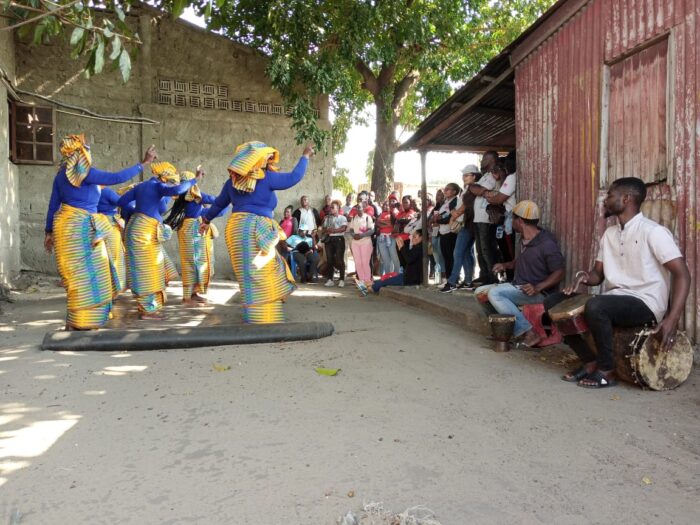
Inhaca also carries memories of encounters and exchanges. In the 16th century, newly arrived Portuguese established a trading post there, making the Tsonga people mediators in the ivory trade with the Zulus. Centuries later, in 1892, the title of Baron of Inhaca sealed a chapter of colonial history that echoes silently in the ruins and oral narratives of the island.
(By MozaVibe)