
In Pemba, data is seen as a key element in transforming a reality marked by internal displacement, mainly caused by terrorism which, since 2017, has affected several districts of Cabo Delgado province.
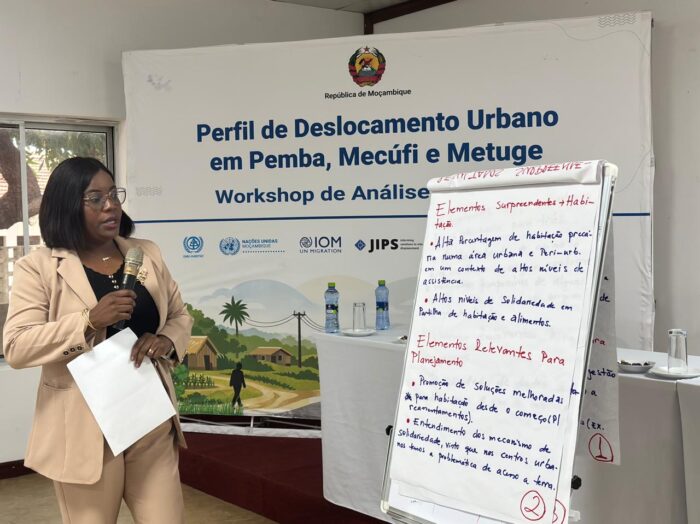
According to UN-Habitat Mozambique – the United Nations Human Settlements Programme – the Greater Pemba area hosts more than 120,000 displaced people, a phenomenon that puts significant pressure on housing, basic services, and social harmony.
The organization states that these numbers represent families seeking a new beginning, and to address this need, the Greater Pemba Urban Displacement Profile was created, a strategic project by UN-Habitat and partners that aims to transform statistics into concrete action.
More than a simple diagnosis, this instrument outlines clear paths to improve housing, guarantee safe shelter for both those arriving and those receiving them, and strengthen urban response capacity.
It also aims to strengthen essential services, reducing pressure on water supply, sanitation, and health, while promoting social cohesion among communities.
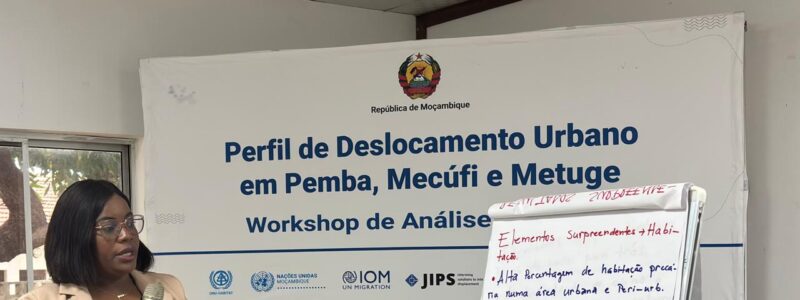
This is not an isolated effort, but rather a collective construction led by governmental actors, including the Municipality of Pemba, with technical support from UN-Habitat, IOM, and JIPS. Academia and local authorities walk side-by-side on this journey, reinforcing a participatory and inclusive approach.
Recently, the Joint Analysis Seminar took place, where data gained a voice. Experts and partners validated solutions that promise to redesign the map of Pemba, ensuring that urban growth effectively translates into quality of life for all.
(By MozaVibe)