
Two decades separate the first edition of Mozambique Fashion Week (MFW) from the one that took place in Maputo from December 1st to 6th, 2025.
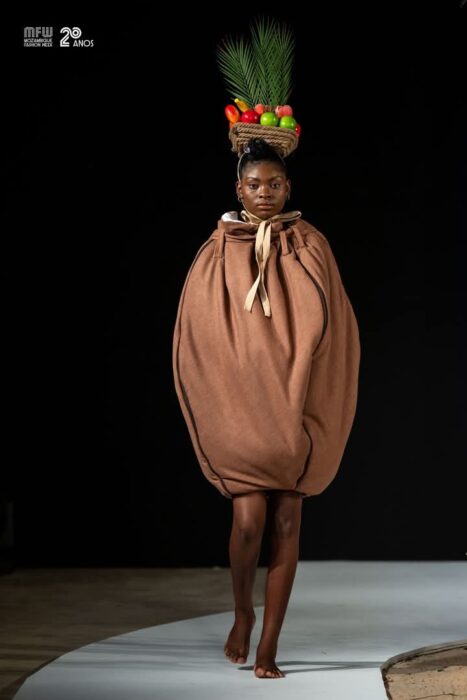
This year, fashion enthusiasts were treated to several new features at an event dedicated to business and value chains.
The MFW, now in its 21st edition, was a space to recognize professionals in fashion, photography, technology, and other areas. It also stood out for its clear focus on cotton.
In a strategic partnership with the Cotton and Oilseeds Institute of Mozambique, a space for debate on production, industrialization, and the market was created. The great merit lay in discussing how to revitalize the value chain, as well as moving beyond focusing solely on the careers of designers. Thus, the transition was promoted towards cotton being processed within the country, involving various actors, from production to the manufacture of clothing using national raw materials.
The Director-General of the Cotton and Oilseeds Institute, Edson Almeida, states that the sector's expectation is to make Mozambique Fashion Week a platform to mobilize the actors in the subsector, especially producers, but also development operators, in order to establish connections with end consumers, that is, with the Mozambican fashion industry.
“As we can see, as a country we have a mismatch in terms of the destination of the fiber produced nationally, mainly geared towards export. But we have the capacity to transform it locally, and it is this capacity that we would like to boost through initiatives of this kind. We want to allow the Mozambican fashion industry to consume cotton produced in Mozambique,” explained Edson Almeida.
Along the same lines, the Secretary of State for Arts and Culture, Matilde Muocha, argued that the government's objective is to see cotton processed internally, in order to enhance the entire production chain linked to fashion creation.
Matilde Muocha hopes that the internal industrialization of cotton, coupled with the development of the fashion industry as a whole, will contribute significantly to the Gross Domestic Product.
“We are talking about the second most important sector from an economic point of view, if it is sufficiently developed, after agriculture. Studies by UNESCO reveal that, in Sub-Saharan Africa alone, this economy represents approximately US$31 billion. Therefore, it is an economy that must be considered,” she emphasized.
MFW 2025 sought to align creativity and sustainability with concrete economic objectives: to encourage local production, strengthen connections between producers and industry, and promote the transformation of cotton in the country. The challenge is to translate these debates into public policies and investments that allow the national raw material to be increasingly incorporated into Mozambican collections and production lines.
(By Joana Mawai)