
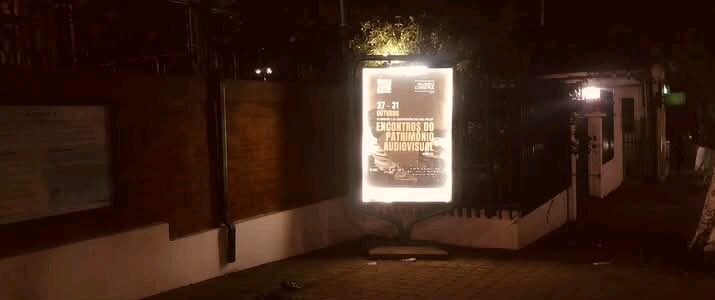
Amidst the sound of the projector and the echo of the stories that shaped African independence, the city of Maputo prepares to host, from October 27 to 31, the third edition of the Audiovisual Heritage Meetings.
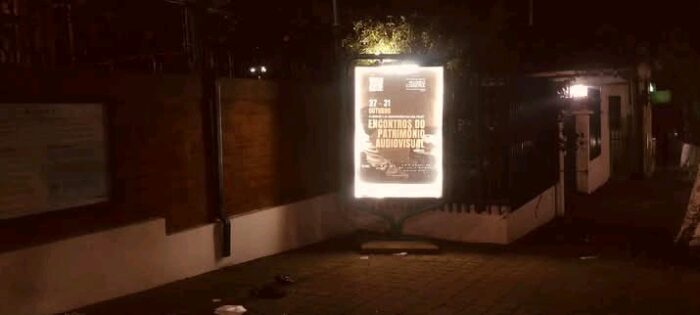
This is a celebration of cinema as a mirror and guardian of the memory of Portuguese-speaking African Countries (PALOP). Under the theme "Cinema and the Independence of the PALOP," the event proposes a journey through image and time, revisiting pre- and post-independence contexts through exhibitions, film screenings, guided tours, book launches, debates, and workshops that bring together researchers, filmmakers, and academics from different regions.
Organized by the Association of Friends of the Cinema Museum in Mozambique (AAMCM), the meetings will take place at the Scala Cinema-Theatre, the Franco-Mozambican Cultural Center (CCFM), and the Portuguese Cultural Center (CCPM).
Among the prominent names are researchers Raquel Schefer, Maria do Carmo Piçarra, Rosa Cabecinhas, and Michelle Sales, who will present their most recent work, while filmmakers Mila Turajlić (Serbia/France) and Rosana Miziara (Brazil) will lead workshops on archives, memory, and visual narrative. Researchers from Mozambique, Portugal, Brazil, Germany, and the United States will also be present, sharing papers and unpublished articles.
The roundtables, featuring figures such as Guinean Sana na N'Hada, Cape Verdean Leão Lopes, and Angolan Ery Claver, will address topics such as The Role of Audiovisual in the Independence of the PALOP Countries; Collections and Digitization Projects, which discusses the archive as a political product; and Ways of (Re)Seeing Mozambique, Film Objects, and Cultural Activism, with Portuguese researchers.
One of the most anticipated debates is "The Power of Cinema in Political Propaganda: An Analysis of Kuxa Kanema and Noticieros, Mozambique and Cuba," which will feature experts from Cuba, France, Portugal, and Brazil, as well as testimonies from Mozambican filmmakers and researchers.
The series of reflections concludes with the panel "Cinema, History, and Teaching," which will feature Michelle Sales (UNICAMP – Brazil), Paulo Cunha (UBI – Portugal), and Inês Godinho (Lusophone – Portugal), in a dialogue on the pedagogical role of moving images.
AAMCM representative Diana Manhiça explained that the debates will be held in a hybrid format, in-person and online, and are intended to be a space for the exchange of ideas and research on audiovisual heritage, with special attention to the role of cinema in constructing the memory of African independence.
One of the highlights of the event is the exhibition on the history of Mozambican cinema, which will be shown at the Scala Cinema-Theatre. Curated by the AAMCM, the exhibition brings together documentary photographs and audiovisual archives that chronicle the history of national cinema, highlighting the 40th anniversary of the film "The Time of the Leopards," a landmark in Mozambican filmography.
Concurrently, at the CCFM and Cine-Scala, there will be a historical film series, featuring rare works and archives from the Cinemateca Portuguesa never before shown in Mozambique, an opportunity to revisit fragments of a collective past on the big screen.
Created in 2023, the Audiovisual Heritage Meetings annually mark International Audiovisual Heritage Day and have established themselves as a platform for dialogue between creators, technicians, researchers, and film lovers.
This year's event is funded by the Calouste Gulbenkian Foundation and supported by the CCFM, the French Embassy (FEF Création Africa), the Institut Français (AOCA), and the National Institute of Cultural and Creative Industries of Mozambique (INICC).
(By Joana Mawai)