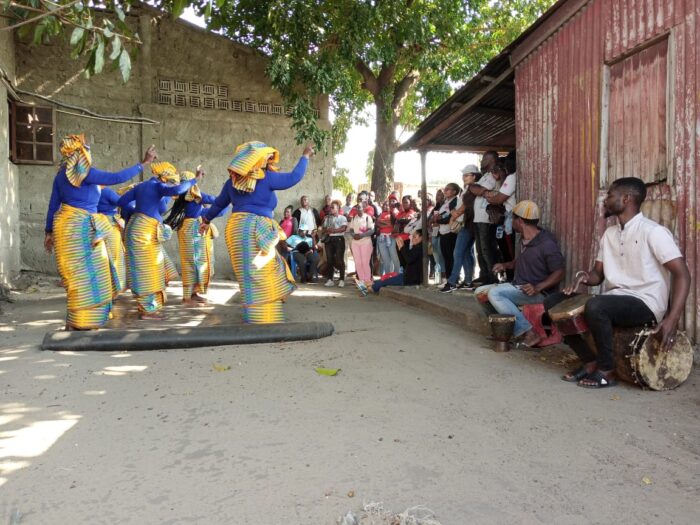

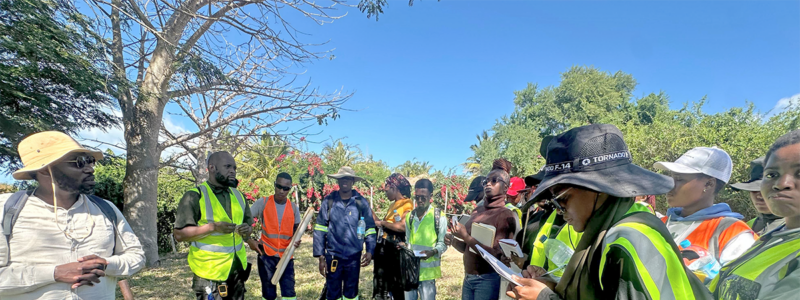
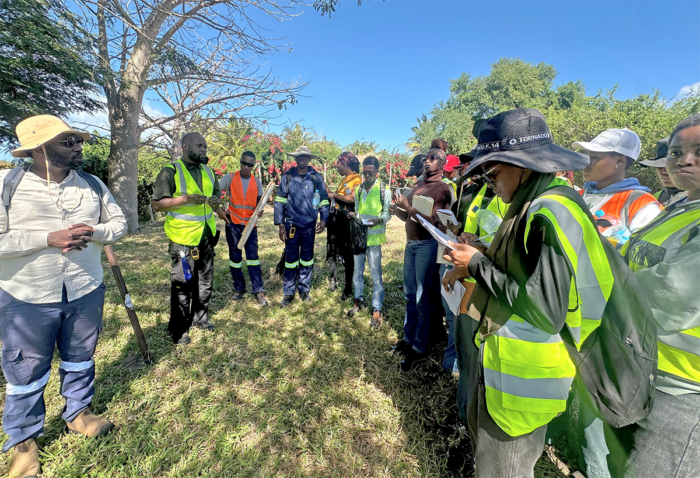
Recently, first-year students of the Bachelor's degree in Archaeology and Cultural Heritage Management at Eduardo Mondlane University (UEM) had a unique experience. They participated in practical classes at Manyikeni and Chibuene, archaeological sites located in the province of Inhambane.
The students, guided by professors Mussa Rajá and Énio Tembe, carried backpacks, notebooks, and the curiosity of those venturing into the past. In Manyikeni, amidst silent ruins, they noticed how each stone seemed to hold ancient secrets.
Manyikeni, located 52 kilometers from Vilanculos, is an important Mozambican archaeological site occupied between 1200 and 1700 CE, associated with the Great Zimbabwe tradition.
It is notable for its unmortared stone wall, built of local limestone, which reflects cultural and political ties to the Mwene Mutapa Empire. Excavations have revealed traces of trade with Chibuene, including glass beads and shells, as well as social differentiation in beef consumption.
The presence of the herb Cenchrus ciliaris suggests an introduction from Zimbabwe. Located near the coast, it played a central role in the Indian Ocean trade network and is now a Mozambican heritage landmark.
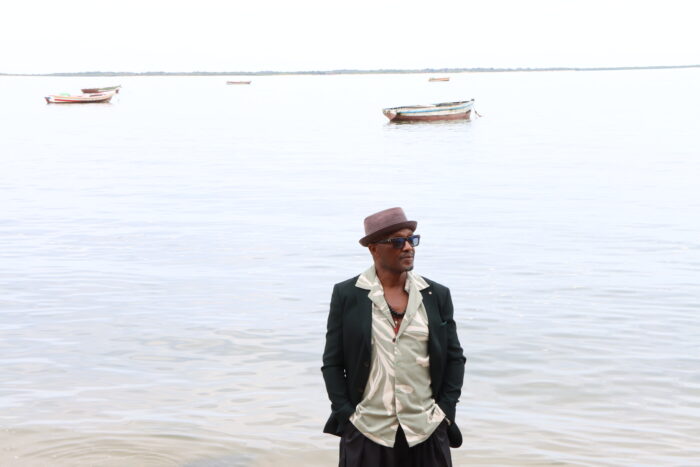
In Chibuene, the sea approached, bearing witness to the trade that, centuries ago, linked Mozambique to the vast Indian Ocean. There, ceramic fragments, shells, beads, and imported porcelain appeared like scattered pieces of a large puzzle.
It is a Mozambican archaeological site, located five kilometers south of the coastal city of Vilanculos South Beach. The site was occupied in two distinct phases. The earlier phase of occupation dates back to the end of the first millennium AD.
(By MozaVibe)