

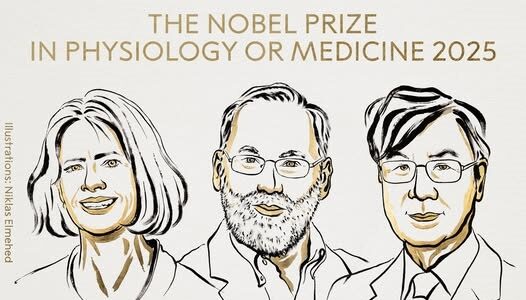
The Nobel Prize in Physiology or Medicine was awarded to Americans Mary E. Brunkow, Fred Ramsdell and Japanese Shimon Sakaguchi for their work on peripheral immunological tolerance, a way the body has of helping to prevent the immune system from becoming unbalanced and attacking its own tissues instead of foreign invaders.
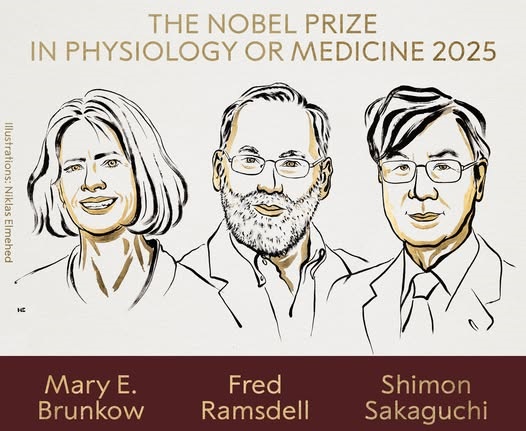
The three scientists identified "regulatory T cells," which act as guardians of the immune system, preventing defense cells from attacking the body's own tissues.
The work of the three scientists thus paved the way for new research into peripheral immune tolerance, essential for the development of treatments for cancer and autoimmune diseases.
The researchers will formally receive the award, officially known as the Nobel Prize in Physiology or Medicine, during a ceremony to be held on December 10th.
This is the first of the Nobel Prizes to be announced, followed in the coming days by the awards for Physics, Chemistry, Literature, Economics, and Peace Sciences.
The Nobel Prizes, created in 1895 by the Swedish chemist, engineer, and industrialist Alfred Nobel (inventor of dynamite), were first awarded in 1901.
(By MozaVibe)