

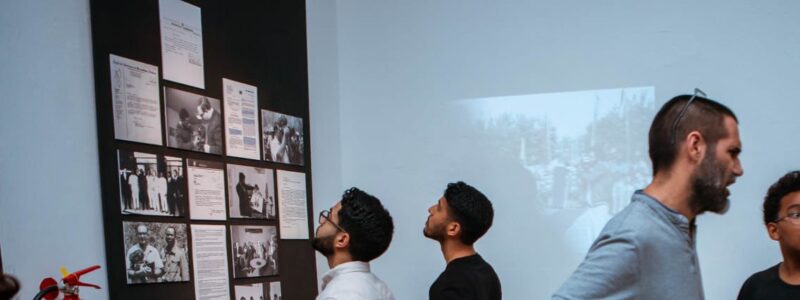
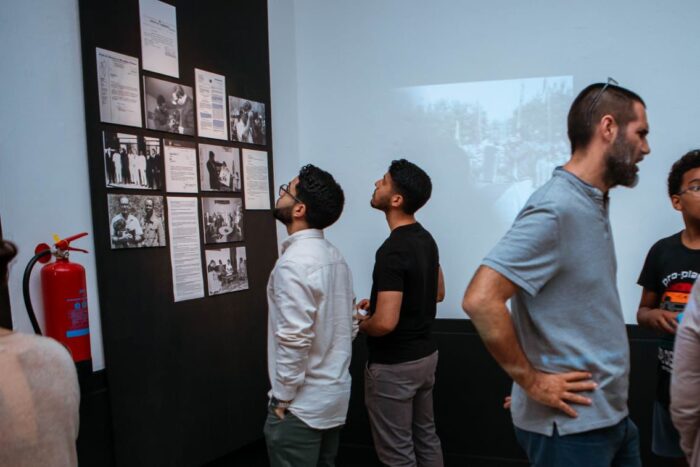
The Scala Cinema-Theatre, one of Maputo's most historic and emblematic centers, is hosting an exhibition until November 30th that unveils the behind-the-scenes story of the classic film "The Time of the Leopards," as part of the third edition of the Audiovisual Heritage Encounters.
The film "The Time of the Leopards" is a Mozambican-Soviet historical-revolutionary co-production, released in 1985, marking the first feature-length fiction film produced in the country after independence, and characterizing the history of national cinema.
The film marks four decades of Mozambican cinematographic work and presents three distinct nuclei that intertwine in a narrative about collective memory. In one of the spaces, the Franco-Serbian artist Mila Turajlic presents a video installation that recovers forgotten images of the liberation struggle, captured by the Yugoslavian cameraman Dragutin Popović in Tanzania.
The organization described the exhibition as “an act of resistance” in the face of the challenges faced by the preservation of the national cinematographic heritage.
“We wanted to create a permanent space, but we depend on other institutions and this dream has been postponed again,” explained a source from the Association of Friends of the Cinema Museum (AAMCM).
The second section of the exhibition is entirely dedicated to “The Time of the Leopards,” revealing original documents from the creative process that united Luís Carlos Patraquim, Licínio Azevedo, Zdravko Velimirović, and Branimir Šćepanović in writing the screenplay.
The third section presents interviews with former employees of the National Film Institute, material that constitutes the main collection of the AAMCM and portrays life in movie theaters during the first years of independence.
The choice of the Scala Cinema is not accidental. “In a city where movie theaters have been disappearing, we want to draw attention to these buildings that are part of our cultural heritage,” the organization emphasized.
This activity is part of the Audiovisual Heritage Encounters, which take place until October 30th in three venues in the capital, bringing together international experts to discuss “Cinema and the Independence of the PALOP Countries”.
The event is supported by the Calouste Gulbenkian Foundation and several national and international cultural institutions, representing a continued effort to preserve the audiovisual memory of Portuguese-speaking African countries.
(By Joana Mawai)